
Hip Osteoarthritis and Dry Needling

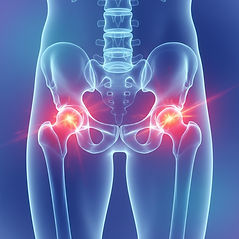
If your hip aches when you walk, climb stairs, or stand up after sitting, you have probably been told it is arthritis and that little can be done until it is bad enough for a replacement. For most people, that last part is not accurate.
Hip osteoarthritis becomes more common as we age, but the pain is not a simple countdown to surgery. How much a hip hurts and how much you can do with it are shaped by the strength of the muscles around it, how well the joint moves, and how it gets loaded through the day. Those are things we can change, which is why conservative care works as well as it does for so many people.
The current physical therapy clinical practice guideline for hip osteoarthritis, updated in 2025, puts individualized strengthening exercise at the center of care and supports hands-on manual therapy alongside it. This same 2025 guideline added dry needling as a recommended treatment for short-term improvements in pain, range of motion, strength and function. That is a meaningful shift, because it reflects better-quality studies than we had a few years ago.
Dry needling uses a thin filament needle placed into tight, irritable knots in the muscles around the hip, the glutes, the hip flexors and the muscles along the outside of the hip. A 2021 randomized trial in Archives of Physical Medicine and Rehabilitation found that dry needling reduced pain and improved hip strength and physical function, with large effects. A 2022 systematic review pooling several trials in hip and knee osteoarthritis pointed the same direction on pain and function in the short term, though the authors were honest that the overall body of evidence is still limited. There is evidence that suggests dry needling helps, and it works best as one part of a plan rather than on its own.
What this means for you is that a hip labeled arthritic is often a hip that can move and feel better without waiting for surgery. We use dry needling to quiet down the muscles that are guarding and pulling on the joint, restore the motion the hip has lost, and then strengthen it so the improvement holds. Often the hip is not the whole story either. A stiff back or a weak core changes how you load the leg, which is why we look at the whole chain rather than the one spot that hurts.
If your hip has been keeping you off the trail, the course, or the floor with the grandkids, you do not have to live around it. You can schedule a visit at https://enhancept.janeapp.com/ and we will find the real source and build a plan in order to get you back to what you love.
Dr. Doug Ashton, DPT, FAAOMPT
Owner, Enhance Physical Therapy
References
Hip Pain and Mobility Deficits, Hip Osteoarthritis: Revision 2025, Clinical Practice Guidelines, Journal of Orthopaedic & Sports Physical Therapy (2025). https://www.jospt.org/doi/10.2519/jospt.2025.0301
Effectiveness of Dry Needling Therapy on Pain, Hip Muscle Strength, and Physical Function in Patients With Hip Osteoarthritis: A Randomized Controlled Trial, Archives of Physical Medicine and Rehabilitation (2021). https://www.archives-pmr.org/article/S0003-9993(21)00147-7/abstract
The Effectiveness of Dry Needling in Patients with Hip or Knee Osteoarthritis: A Systematic Review and Meta-Analysis (2022). https://www.ncbi.nlm.nih.gov/pmc/articles/PMC9605049/


Comments